
The Solipsist
STORIES
By Michael Washburn
5/29/2026
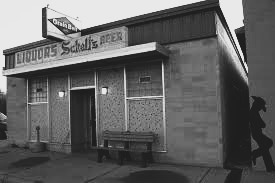
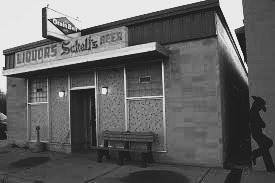
On a Saturday afternoon in late September, when the town in central Iowa was not yet out of summer’s lazy spell, a handful of guys who had just turned twenty-one languished at Broad Street Station. In this tavern the size and shape of a barn, at the opposite end of town from the college, were jukeboxes, pool tables, and free popcorn at certain hours, making it popular with the blue-collar youth. For all the fun, this place had long had a reputation for being rough and rowdy. Until a couple of years ago, when a hardline mayor took office, it had not been rare to see a man shoved, pulled, dragged, or carried out of the establishment.
For Al Hegglund, Pete Olson, Steve Wilkes, and Ed Fowler, this visit to the bar was taking an intriguing turn. They had drawn the attentions of Becky Purcell and her friend, Marsha Hoyt. Though Marsha had a reputation as a loose little skank, Becky was a good Christian girl who sang at the Seventh Day Adventist Church on Sundays and acted as a conduit for gossip down at Hank’s Diner. People adored Becky and made running bets about which guy she would end up marrying. The lucky man would get a lovely wife who wore quaint white aprons while baking pies, whose singing in church drew people from all over the county. That was what Pete believed, though Al thought it a gross exaggeration. In any event, the young men of the town took to her like paparazzi to a princess.
On this lazy afternoon, Becky was encouraging the guys, none of whom had been twenty-one for more than a few weeks, to talk about their dreams. Marsha let out a giggle on occasion but was mostly a quiet sidekick. On the far side of the tavern, the bartender, Norm Hammond, washed glasses under no pretense of ignoring the talk.
“So, Al. Suppose that I’m a gypsy that just wandered in here from the deserts of Arabia. And supposing you was to take a look into my crystal ball. What does the future hold—love, riches, liquor? Are you going to marry Debbie Vartle? Do you see a house and three little Hegglunds tearing up and down the stairs, a big John Deere tractor, going to Rocky’s on bowling nights, coming here every weekend to drink more Pabst Blue Ribbon than any three people combined?”
The others laughed. Al shuffled, hands stuffed into his overalls, looked at his feet.
“I don’t know, you might want to ask Debbie about that,” said Steve.
“Good idea,” Ed agreed.
“Come on, she ain’t been datin’ him since the eighth grade so’s she can move to Chicago and marry a stuffed-shirt,” Pete said.
“And how about you, Mr. Olson?” Becky said, making eye contact with the burly youngster in jeans and a blue flannel shirt with the sleeves rolled up to his elbows.
“Yeah, so how about me?”
“Suppose you look into the crystal ball. One, two, five years from now, are you gonna be full-time at Lube Pro’s? Are you gonna stop your roaming and settle down with a nice lady?” Becky asked.
The thing about Pete was, he had trouble reading and making word-associations sometimes. People at home taped handmade signs to items in the fridge: “Milk,” “OJ,” “Butter,” “Syrup.” When he started his job, he’d had trouble dealing with customers. His voice faltered, he struggled to recall his lines. After a couple of weeks of awkwardness, he had grown a bit more comfortable with the pitch he was supposed to give, “As part of our service here today...” and he actually kind of liked the way it sounded when he said it. Folks appeared to believe Pete when he said that unlike some places where they just top off your oil, here you get a complete change. But whether he should do it for the next four years was another question. Maybe, if he worked his tail off, there was the possibility of getting named employee of the week. At times he frankly wished he had a crystal ball.
“Why don’t we come back to me?” Pete asked.
“Fair enough. So how about you, Steve. Do you think you’ll tie the knot with Mary Barnes one of these days?”
“Damned if I know. I always thought we was made for each other but she fairly turns green whenever I try to bring that thing up,” Steve replied.
“Well, maybe it’s not you, maybe it’s the idea of being with another person for six, seven decades. But maybe she’ll come around,” Becky said.
“Shucks, I really dunno.”
“She will, Steve. Like they say, ‘Marry in gray and be sad someday. Marry in yellow, you’ve got the right fellow.’”
Steve just looked at the dusty ground, at the imprints left by boots. Though he wanted to envision a happy future with Mary, his mind was host to a weird image, of the inside of a plain, spartan house as seen by somebody walking quietly, resolutely up a flight of stairs and passing rooms on either side without looking into them.
“And how about you, Ed? Do you think—”
Becky wanted to ask Ed about remarks he had made from time to time about wanting to enlist and go abroad and “kill me some Arabs.” That hardly sat well with the scenario she had given these young men about her being a gypsy from the sands of Arabia bearing a crystal ball, yet she would have asked him anyway.
But now a pair of young men made their way inside and strode past the bar, past the jukes, over to one of the wooden tables in the center. You could tell right off they were college kids. One of them had long straight blond hair and wore John Lennon glasses, a red cotton short-sleeved shirt, beige trousers. The other resembled a young Mark Wahlberg, with a fresh creamy complexion and clipped dark hair, wearing a blue polo shirt and chinos. Their names were Zev Miller and Dan Rhodes. They were both sophomores, or to use the nomenclature of the day, second-year students, at the private college at the opposite edge of the town. A middle-class kid looked so out of place in parts of this burg that just the sight of one out walking alone on a road between vast cornfields on a golden afternoon could prompt a driver to lean out his window, honk his horn, and thrust a middle finger high. Obviously that did not deter kids from the campus from getting around here and there.
The hour was still too early for waitstaff to go around, so Dan got up and approached the counter and got them a couple of Coronas. Back at their table, Zev squeezed the lime stuck in the neck of his bottle as hard as he could, letting its juices trickle down to mingle with the beer, while Dan took his own lime and set it on the dusty oak surface. The locals watching from twenty yards off thought Zev was going to pick up Dan’s lime and pinch it, but even this longhair had a bit more class than that, they saw. They did not catch all the talk between Zev and Dan but there came words here and there that were alien to them: semester, professor, tenure, thesis, seminar, Rorty, hermeneutics, imperative, social hierarchy. They sat there watching the college kids without once getting a nod from these youngsters at their existence.
Becky thought about an incident related to her recently by her friend Alice Swenson. It was a nasty encounter involving a couple of other college kids in a flashy red convertible that sped uncomfortably close to her on the street. When she had yelled at them as they sped away, one of them had turned back and responded with abuse. Every single one of the roughly 1,200 kids at the college became those two kids in Alice’s mind now, and in Becky’s. And there was another incident she had heard of, where Bruce Lawton had stepped out of his pickup on a Friday night and tried to talk to a black-clad kid making his way up a street to one of the off-campus apartments. Bruce and the college kid had both been drinking and Bruce’s speech had degenerated into something like, “What’s your problem, man? Was’ your freakin’ problem?” When Bruce caught up, the kid punched him in the face and ran off. Everyone who knew Bruce imagined scenes of that bohemian kid telling others about his run-in with a townie. Ah yes, townie was the ever-popular term among these silver-spoon children and it was low, like calling someone a pederast or an obscure part of the anatomy.
Last but hardly least was the matter of the flag. The American flag that a pair of long-haired sandal-clad kids living in a college-owned house across the road from the campus proper had hung upside down from a window of their second-floor room. Residents of the town who passed by were so upset they called the sheriff, but the students’ and the administration’s position was that it was constitutionally protected free speech.
Right now there was something about Zev’s hair that put Becky in mind of a pin she had noticed on the backpack of one of the college kids while standing on line at the bank two blocks from here. The pin read Why Be Normal?
Al and Steve exchanged whispers. Pete sized up the two interlopers coolly. Becky could not fathom Ed’s expression. It was somewhere between the curiosity of an entomologist and the calculation of a sniper.
Still the talk at the table twenty yards away plodded along. “Do you think Magnus would even pass a paper like that?” “I know people think she’s kind of got a ‘Magnus complex’ because she’s filling his shoes while he’s on sabbatical.’”
And still Al and Steve stared at them and whispered. Becky’s palms began to feel a little moist as her eyes scanned the far side of the room for Norm, who must have been in the john right then. The thought had come to Becky that maybe, just maybe, Norm would be willing to forego these two kids’ money while kindly suggesting they go and try Jimbo’s Bar over on Main Street. That they go right now.
Zev got up, returned to the bar, came back with two more Coronas, repeated the ritual with the lime. In Zev’s brief absence, Dan managed to convey intensity while looking at nothing in particular.
The two interlopers from the college had just gotten started on their second round when Al and Steve got up. The pair of working guys sauntered over and planted themselves inches from the college kids’ table. Zev and Dan looked up at them, not with alarm but with surprise, like when a bike cuts across your lawn on a tranquil day.
Steve wore a smirk and it was not nice to look at, Becky thought.
“Where you guys from?” Steve asked without preamble.
Zev and Dan looked at him for a moment before Zev answered, “The campus.”
Steve nodded.
“That where you’re goin’ after this?”
“Uh, probably,” Zev said.
“Can we come with you?” Steve said, leering.
Zev and Dan looked at each other. Then to Becky’s amazement, they started to resume their conversation as if the two big guys were not standing right there by their table.
“You think it’s kind of rude of you to just act like we’re not here?” Al demanded in the labored voice of a man weighing nearly three hundred pounds.
But Zev and Dan just kept talking to each other in a manner as seemingly nonchalant as before. So absorbed were they in their own interaction that they did not seem to notice when Pete, Ed, and Marsha sauntered over toward the table, leaving only Becky in the original spot with her palms moist, her blood arching and leaping.
“I said, do you think it’s kind of rude of you to act like we’re not here?” Al demanded again, slamming his empty glass down on the oak surface.
Now Zev looked up. His face looked pale, almost kind of pasty, in the white light coming through the window beside where Becky stood.
“Not half as rude as coming here and butting into our conversation,” Zev said in a firm voice.
Al sneered.
“You gonna do somethin’ about it?”
There was something studied about the absence of any sign of upset in either Zev’s or Dan’s face, or so it seemed. Zev looked into the eyes of his questioner as if he were annoyed, but not surprised or startled.
In reality Zev had already processed the situation, reading the questioner’s attitudes, assumptions, and motives for exactly what they were, and Zev felt the untruths like tarantulas crawling up his arms. These people, so touchy about assumptions that others supposedly held, had their fair share of assumptions, Zev thought. They acted in the belief that the college kids were all spoiled, pampered brats who never stepped out of their cocoons of privilege, never, not once. They believed that the college kids reeked of a superior attitude and delighted in exposing and ridiculing the intellectual inferiority of the backward, Bible-thumping townies. The local people, according to this same viewpoint, were good honest folk trying to go about their lives, cleaning up messes that the college brats made around town.
Certain of Zev’s philosophy professors had made a solipsist of him. He really believed in nothing much beyond what he knew and felt. He grasped the impossibility of proving, really proving, anything, and how much more common demonstrably false propositions were than demonstrably true ones. Certainly, in Zev’s mind, the notion of the townies as good simple folk who did a day’s work for a day’s pay, harassed and made miserable by brats from the rich suburbs, foundered on incidents whispered about around the campus. There was the time a couple of weeks ago when a townie on a bike rode up behind a young female student out jogging on a road between the cornfields, grabbed her left buttock, squeezed it hard, and rode off laughing. There were the teen drivers who shot down the road bisecting the south campus at homicidal speeds, yelling “Fuck you!” at any students they saw. There was the time a bearded man in an idling red pickup called an African American studies professor standing outside the local cinema a certain slur. There had been assaults, and in one notorious incident a few years ago, a student from India had his throat slit.
As for the former notion, about protected brats who never ever rolled the dice, Zev made a decision on the spot.
“Yes, bumpkin, I think I am going to do something about it,” Zev said, looking into Al’s stolid blue-gray eyes. To drive the point home, Zev spat. It did not even go near where he intended but made the point effectively.
Al’s fingers clutched and un-clutched like a malfunctioning crane. He wanted to bang the glass again but knew he would break it. He wanted to grab that long hair at the root and slam that pretty head—
“Outside!” came a voice from across the room. It was Norm, behind the bar.
Everyone but Norm and Becky went outside now. They avoided the street in favor of an alley between the tavern and a social club that doubled as a political party headquarters.
Zev hoped that he would benefit from something equivalent to the adrenalin rush that comes when somebody gets pinned under a tree or a car. But as he and Al circled each other, he realized he did not really feel stronger than usual. The circling was awkward and silly, especially in front of all these people. But now Al forced the issue with a lunge and punched Zev hard in the left shoulder. In this claustrophobic space, Zev realized how little his calculations about Al being powerful but not very fast mattered. When he tried to slam Al in the jaw with his right fist, Al briefly managed to close the fingers of his left hand around Zev’s arm and hold Zev in place as he landed a blow on the smaller guy’s chest. Zev felt dull pain, like a boulder crushing him, and breathlessness. The college kid wriggled his right arm free and managed to land a blow on Al’s cheek, but Al was moving in the same direction as the blow. He hit Al twice more before Al punched him so hard in the mouth Zev had the sickening sensation of something in there jerking backward and coming loose, hanging at a weird angle. He tried to kick Al but the bigger man walloped him in the face and gut and the lower half of Zev turned into the sun for a moment and Zev buckled, teetered, and finally fell onto his back, hearing a female voice wail and implore someone to stop doing something.
Zev could not speak or breathe. When Zev tried to get up, Al kicked him so hard he split Zev’s lower lip and now there was a lot of pulpy mass loose in there. The motions Zev was aware of now were like the descents of an angry bird that tore out a piece of him each time. The kicks knocked things loose, displaced flaps of skin that tilted or fell back but not quite into place. Voices around him now were quite loud as blurs slid between him and the tree from which the birds were coming down.
At the county hospital, they were able to fix Zev up partially, and he ignored people who told him to skip going to classes for a few days the following week. There were times when it was hard not to get up and walk out of the class, across the campus, and to the bed in his dorm.
But he took refuge in the untruths. The manifest untruths. Other students tried to be polite but some looked with pity and horror as he sat there, with a bandage on his lower lip and another on his left forearm, with stitches three inches above and parallel with his right eyebrow. Cuts opened up again and he sweated in terror over his condition. At times it was hard to conceal his weeping as a professor droned on or the motions of his hand when bleeding started again someplace and he needed to wipe the area with saliva. There were times he could not control the sobbing even as he knew boys and girls watched him.
But Zev told himself he had no obligation to react to his experience in any particular way, he had not caused the experience though errors that could be objectively proven as such, it was all based on assumptions, he must believe in nothing outside himself and must find shelter, comfort, a secure hermetic space, in the majestic authority of solipsism.
BIO: Michael Washburn is a New York-based novelist and short story writer.
Follow on Social
Literary Garage: Storytelling with grit, heart, and no off-ramp.
© 2025. All rights reserved.
Connect


editor@literarygarage.com
Follow us on Substack for updates and news
Clicking thE SUBSTACK link will direct you to an external website for our Substack feed. The content and privacy practices of Substack are not controlled, and no responsibility is taken for any issues that may arise on the platform.
Editor-In-Chief: Kevin Christopher Michaels
Special Features Editor and Warrior God: Michael Downing