
Sayonara
SHORT FICTION
By Tom Andes
4/23/2026
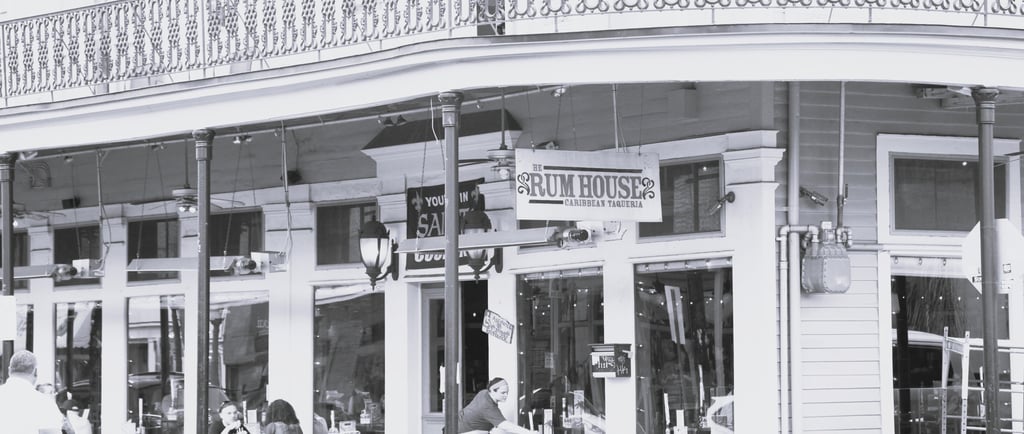
Six months ago, when she’d opened the noodle house, Sayonara on Magazine, Terri Bernstein had taken out short-term loans at a high interest rate from Hibernia Bank. By the time they came due, the restaurant had cycled through three head chefs, two front of the house managers, four bar managers, and the entire front and back of the house staff twice, but it had yet to turn a profit. Why hadn’t anyone told Terri that most restaurants took a year, sometimes two to break even? Well, maybe someone had. But Terri had moved to New Orleans from New York City, co-authored a bestselling cookbook with a local celebrity chef, and she figured if anyone could beat the odds, it was her.
That was how she ended up sitting across a table at Mosca’s in Westwego, Louisiana from a guy who claimed to be Carlos Marcello’s grandnephew, a man with a square jaw, Brylcreamed hair, and a pudgy neck, less a mobster than an accountant, who was offering to take those loans off her hands.
Under the table, Terri reached in her purse, opened her pill case, and palmed another Valium. The guy was yammering at her, but she was half-listening. These Italians could talk a blue streak, and she’d never gone in for the Southern thing where you spent an hour exchanging pleasantries before you got to the point. No, she was a New Yorker, all business, go, go, go, so it mystified her that the restaurant was failing. Everyone down here moved so slowly, with their stupid drawls and their lazy way of doing things, like they were swimming through those thick butter sauces they put on their food. How could she be falling behind?
“How much do you owe, anyway?” Sam Tonelli slurped up more oyster dressing and bordelaise. She popped the pill, washing it down with chardonnay. Failure was not an option.
When she told him how much she was in the hole, she expected him to walk away from the table, but he shrugged, like it wasn’t such an unreasonable sum, five hundred grand, half a million dollars, more money than she’d had in her life, at least all at one time.
“What’s a white lady like you doing opening a noodle bar, anyway?” He was squinting at her across the table, cocking his head, for all the world, like a big, dumb, friendly dog, an Australian shepherd, gesturing at her with a piece of buttered bread. “I mean, if you don’t mind my asking, are you Chinese or something? You don’t look it.”
Terri’s stomach turned, but that was the price of doing business with rubes like this. She’d managed small bites of spaghetti with red gravy—tomato sauce, by any other name—and bordelaise. It wasn’t real bordelaise, not like the French made, just a combination of garlic, olive oil, butter, and it was congealing on her plate under the excessive air conditioning they used down here, like Southerners were so fascinated with the technology that let them refrigerate their houses and places of business, they ran it on high all summer and most of the fall. They were like the tribesmen in The Gods Must Be Crazy, marveling at the Coke bottle that fell from the sky.
“I wrote a cookbook.” She tried to keep her distaste for this man out of her voice. He’d tucked his napkin into his collar. Between bites, he licked his fingers.
“I know, I know.” He was chewing with his mouth full. “With Amethyst.”
Amethyst was the local celebrity chef she’d written the book with—or really, for. He’d connected her to Sam Tonelli, who she suspected sold Amethyst cocaine. Well, she wasn’t a prude. And no way on her own she could find people like this.
“A different one,” she said. “Before I moved here, I co-authored a cookbook with an internationally renowned sushi chef in New York, and the recipes at this restaurant are inspired by his place on the Lower East Side.”
“But you’re not making sushi.” Sam’s brow furrowed. “You’re making noodles.”
“It’s fusion, Asian fusion, like all different kinds, like mixed—fused—and anyway, they have noodles at sushi places, too.” She hadn’t anticipated giving him a vocabulary or a cultural lesson. “And for your information, no, I’m not Chinese. I’m Jewish.”
Was it a liability to say that? Lord knew the South was backwards, New Orleans filled with a bunch of good ol’ boys drinking Dixie beer and eating French fry po-boys, backslapping buddies in LSU colors, purple and gold, like adult men who’d never grown out of fraternity life.
But Sam waved.
“I got no problem with anybody.” He wiped butter and olive oil from his lips and mopped up more red gravy with that piece of bread. “You want a little more time with your restaurant, I can pay those loans off for you, no problem.”
He shoved that piece of bread in his mouth and buttered another.
“Really?” She was stammering. “Thank you.” She felt so relieved, she might’ve cried. But she didn’t want to put herself at a disadvantage with this man, who would likely throw an arm over her shoulder, call her “little lady,” sexist claptrap like that.
He was talking, and she should’ve been listening. He was spelling out something important to her, to both of them, namely, the terms of the loan. But her mind snapped shut, and she nodded, shocked he’d said yes.
“What’s the matter, you’re not hungry? Food’s no good?” He sounded like he might rough up the chef.
“No—yes—it’s very good.”
“Well, you’re not eating.” He pointed at her plate with his fork. She couldn’t tell whether he was threatening her or concerned, offended or worried.
The food wasn’t bad, not for regional cuisine, but the place could’ve used a makeover. The dining room was done out in wood paneling and looked like it hadn’t been redecorated since the Nixon administration.
“Big lunch,” Terri said. “Besides, I’m trying to cut down on carbs.”
And that might’ve scotched the whole thing. He gave her a look like she’d just cut the head off the Virgin Mary.
“I mean, not that there’s anything wrong with carbs.” She was cringing.
When it came time to sign, he shook his head.
“We don’t need any paperwork.” He wiped his hands, and he reached one of those big, pudgy paws across the table. “We do business down here with a handshake.”
Trying to ignore the grease glistening on his fingertips in the restaurant’s harsh light, trying not to think about him licking his fingers, she shook, then excused herself to go to the restroom, where she washed her hands twice, cried, and tried to put herself back together.
#
Six weeks later, when her first payment came due, Terri knew she was going to be short. But how could she help it? It was August in New Orleans, the doldrums of summer. That meant no tourists, the slow season. Besides, that block of Magazine had a reputation, and if she was hoping to catalyze its transformation, that was going to take time. More to the point, people here didn’t know how to eat. They were scared of anything that wasn’t deep fried or slow cooked for four and a half hours in a Magnalite pot. What wasn’t fried, was smothered or stewed to within an inch of its life. It was going to take time to educate their palates.
She told Sam that the first couple-three times he called. Then she stopped taking his calls, and everybody else’s calls, too. Not that she had many friends left. She asked her therapist to up her dosage of Valium, adding a script for Xanax. There was, after all, no paperwork. What could these people do that would stand up in a court of law?
That Friday night, when the black Cadillac El Dorado pulled up to the curb, parking in the handicapped space in front of the restaurant, Terri felt a clutching in her chest, her throat tensing, like she might vomit up the frisée and lardon salad she’d eaten for lunch. Even before they got out of the car, those goombahs in their shiny suits with their wraparound shades, she knew who they were. Even before one of them walked around the car and opened the door for Sam, who stepped out in his spit-shined shoes, looking up and down the street like he owned the place, she knew what they were there for.
Bert, the off-duty NOPD cop she’d hired as a security guard, was sitting out front, and he nodded at the men as they came in.
“Kitchen’s closed.” She greeted them at the door, clutching the choker, the string of pearls her mother had given her, which was fastened around her neck. With a whoosh, the air conditioning billowed out of the restaurant, the heat coming in. The sun was setting over Audubon Park at the end of Magazine, and it burnished their faces, Sam’s whitened teeth shining as he leaned down to her, touching a finger to her cheek. She got a big whiff of breath mints and cheap cologne. It smelled like he’d dumped the bottle on himself.
“At 7:30,” he said, “on a Friday night?”
“Summer hours.” Terri forced a grin. Her jaw hurt. She’d been grinding her teeth, sleeping an hour or two, at best.
“Must be why this place isn’t doing so well,” Sam said. “You haven’t been returning my calls, so we thought we’d stop by.”
“Actually,” Terri said, “we’re booked. Reservations. Completely full.”
“We’ll just take that table, over there.” Sam pointed, and he led his posse, or his crew, whatever people like him called their hangers on, over to Table One, the big booth in the corner. The men he was with dressed like they were going to a strip club. They sat with their legs wide and their arms draped over the backs of the benches, like they were waiting for lap dances.
Terri grabbed menus from the stack next to the register and in a quiet voice told the front of the house manager to go home. They were running on a skeleton crew, guys standing around the kitchen, smoking cigarettes on the stoop out back. Terri didn’t like it, but what could she do? Only so many times you could ask them to polish the silverware.
If things got bad, she could count on Bert, who was taking home a hundred and fifty bucks cash in an envelope every night. Even if he seemed to spend most of his time sipping from a silver flask and dozing in his chair out front, he did have a gun.
When she went over to the table, Sam’s men were laughing at something Sam must’ve said, and it felt for all the world like that horrible year she’d spent in the classroom at East Cherry Hill High, those kids ridiculing her, beyond her control, desperate to impress their leader, the alpha, like The Lord of the Flies come to life.
She passed menus around the table. “We have specials, if you’d like to hear about those.”
“Sure.” Sam sounded like he was humoring her, and she bristled at his patronizing tone. “Go ahead, tell us about the specials.”
One of his men snorted, like he was trying to hold back laughter, and Terri felt a flush creeping up her neck, the lobes of her ears turning red. But she was on a cloud, the Valium making her feel like she was packed in fiberglass, like there was a part of her nothing could touch, a distant part somewhere far away from her body, which was here in this restaurant in New Orleans, going through a pantomime of her life.
She was halfway through describing the salmon skin sushi roll they’d been running all week when one of Sam’s men tapped him on the shoulder, pointing at something on the menu and showing it to him.
“Fifteen bucks—” Sam slapped the menu, incredulous— “for a bowl of Ramen?”
And Terri could feel a piece of herself, maybe an essential piece, maybe the essential piece, breaking away.
“Yes.” She started to say more, but he interrupted her again.
“I can go down to the gas station on the corner,” he said, “and buy thirty packets of Ramen noodles for that much money.”
And now that essential piece broke away and was swept downstream, like a leaf floating along the Mississippi.
“It’s not the same thing.” She was gritting her teeth, liable to crack her molars. She imagined them crumbling like rubble on a building site.
Sam was flapping the menu. “Lady, Ramen noodles is Ramen noodles. Am I right, or am I right?”
Since he’d left her no other option, heads-I-win-tails-you-lose, she shrugged, helpless.
Sam shook his head. “No wonder nobody comes in here, you don’t mind my saying.”
“What about spaghetti and meatballs?” The one who spoke was a younger guy with the face of a kid who sat in the back of the classroom lobbing spitballs at the heads in front of him.
“We don’t have spaghetti and meatballs,” Terri said, and she could feel her veneer starting to crack. She’d taken to wearing glasses that were literally rose-tinted, sort of a Janis Joplin look, so the employees couldn’t see her eyes, but they weren’t doing much for her disposition. “This is an Asian fusion restaurant.”
“Fusion.” The kid repeated the word, stretching out the vowel sound, making fun of her.
“Do you really eat the skin of the salmon?” Sam said. “Where I come from, we throw that part of the fish out.” She started to answer, telling him the dish was inspired by the chef she’d worked with in New York, but he held up a hand. “Why am I asking you, anyway? You’re not even Chinese.”
“I’m going to have to ask you to leave,” Terri said. “I don’t know what kind of shakedown operation this is, but the kitchen’s closed.”
She was going to summon Bert the off-duty cop, and maybe he would finally earn the hundred and fifty bucks she’d been paying him every night since the restaurant opened its doors six months ago. He’d likely cleared more profit than the restaurant had. No way he’d been paying tax on that.
But he was standing in the doorway, giving her a strange, guilty look.
“Bert.” Sam waved. “How are the kids?”
“Not bad, Mister Tonelli.” Bert stood as if at attention.
“You can go ahead and lock up. Tell anyone left in the kitchen—” Sam jerked his thumb— “they can take the rest of the night off, too.”
“All right, Mister Tonelli.” Bert was handsome, dark-skinned, from an old Creole family, she’d been led to believe, and he gave her a nod, looking an apology at her as he walked past.
“You can’t do this.” Terri was shaking her head, fingers clawing at her pearl choker. “I’ll call the police. I’ll—”
“I’m not sure you understand the terms of our agreement.” Sam gathered up the menus she’d given them.
“Terms?” Terri said.
“Bert,” Sam said, “keys.”
“Right, Mister Tonelli.” Bert dropped the keys she’d given him to the restaurant in Sam’s palm. In the kitchen, the guys she’d hired to work the line were laughing, cutting up as they went out the back door. Well, they were easily replaced, and they were a bunch of lowlifes, anyway. She’d hired them out of the Popeyes up the street because she could get away with paying them minimum wage.
“I’ve been wanting to get into this part of Magazine Street,” Sam said. “I think you’re right, this strip is ripe for a turnaround, and it could really be something in a few years. But this whole place—” he made a face— “needs a rebrand.”
“Rebrand?” Terri fell back, leaning against the cash register, like they might try to bust into that, too. Except nothing was in it for them to take. And yeah, that piece of herself was slipping away now, a part of her like the name of the restaurant going sayonara—goodbye.
“I was thinking something like Mama’s Italian Kitchen,” Sam said. “What do you think? You think we’ll be able to sell that to all the hicks and rubes down here?”
He reached around Terri, picked up the stack of menus from next to the register, and dropped those into the garbage, too.
One of those men had a gun, the barrel shiny and silver, like the décor she’d spent so much time going over before she’d settled on the color scheme in the dining room. She gulped.
“What do you want from me?” She was standing in front of the register, tugging at the choker. It felt like a dog collar, like Sam might’ve leashed her. “What am I supposed to do?”
“I thought we’d go back in the kitchen,” Sam said, “and I can show you the recipes you’ll be making. I’ll show you how my mama used to make cucuzza and red gravy. You know what cucuzza is? It’s a big, Italian squash, as long as your arm.”
He was holding his hands apart, like he was describing a fish. One of his men snickered, like he’d told a dirty joke.
“You—” Sam was pointing at the guy— “shut up. Just put a sock in it. My daddy loved that stuff. My mama made it for him every Sunday.”
“Sorry, boss.” The guy cowered like a dog smacked with a rolled-up newspaper.
“You can’t do this,” Terri said.
When she went for the door, the one with the gun was standing in the way. The one with a schoolboy’s face walked around the dining room, pulling the shades. A fourth one took the cocktail menus and the flower arrangements off the tables and dropped them in the trash.
“I know a good contractor,” Sam said, “a friend of my cousin. We should be able to get in here tomorrow, take this place apart, have it put back together by the end of the month, when people start coming back to the city. We’ll give it a more homey, welcoming look, maybe put in a little wood paneling, make it the kind of place you really want to spend time.”
“I spent tens of thousands of dollars,” Terri said, “just decorating this place, trying to give it that authentic New York City noodle house vibe.”
“Lady,” Sam said, “this ain’t New York City.”
No kidding.
“I’m going home,” she said, but what could she do? He’d paid off those loans, given her enough to keep this place afloat. She’d put everything she owned, everything she had into this business. Nothing was left, not enough in her personal checking account to make the next payment on her Warehouse District condo.
Sam was walking around the dining room, clapping his hands. “Amethyst is going to love this place.”
“Amethyst?” She wanted to fold up on herself and disappear, like a little origami bird.
I should’ve known.
“I’m his silent partner in all his restaurants,” Sam said. “Now this one, too.”
She reached in her purse. She was going to pop the last of her Valium. But the pillbox was empty.
Sam helped himself to a glass of prosecco, tossed it back, and threw her an apron from the stack behind the bar.
“Now put this on,” he said, “and we’ll go back in that kitchen. I’ll show you how to make good Italian home cooking, real food that sticks to your ribs. Maybe you can write about that.”
BIO: Tom Andes is the author of the detective novel Wait There Till You Hear from Me (Crescent City Books 2025) and Guess This is Kaput: Stories (forthcoming, Cowboy Jamboree Press). His stories have appeared in Best American Mystery and Suspense Stories 2025 and received the Shamus Award from the Private Eye Writers of America. He lives in Albuquerque, where he is a working musician. He can be found at tomandes.com.
Follow on Social
Literary Garage: Storytelling with grit, heart, and no off-ramp.
© 2025. All rights reserved.
Connect


editor@literarygarage.com
Follow us on Substack for updates and news
Clicking thE SUBSTACK link will direct you to an external website for our Substack feed. The content and privacy practices of Substack are not controlled, and no responsibility is taken for any issues that may arise on the platform.
Editor-In-Chief: Kevin Christopher Michaels
Special Features Editor and Warrior God: Michael Downing