
Fixing A Shadow
STORIES
by David Hagerty
4/28/2026
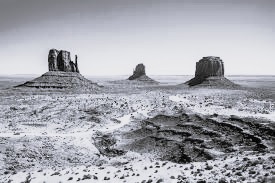
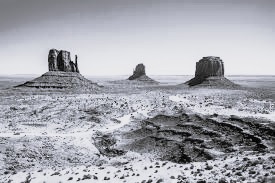
Lyle was seeking the perfect angle for his photograph of a desert butte when another type of shot distracted him: the zing of a bullet close by, the dull thud of it penetrating the soil, and finally the echo of a rifle’s recoil across the vast, empty basin.
All Lyle could think to do was hide, but in the canyons of Monument Valley there was nothing—no trees or bushes or boulders to duck behind—only the massive cliffs which stood too far to run, so he fell on his face and covered his head as though ready for a police frisking. He lay prone for several seconds before realizing that the gunfire was almost certainly an error. His camera must have startled one of the native Indians, who disliked having their pictures taken.
“I wasn’t aiming at you,” he yelled, then waited as his call repeated back to him.
“No, I was aiming at you,” said a slow drawl.
Lyle lifted his head and scanned for the hunter. The man sounded more redneck than redskin, someone as out of place in a tribal park as him. Stumped, all he could think to reply was, “Why?”
“You’re trespassing.”
Lyle followed the voice to a bluff a hundred yards distant, where a horseback rider stood silhouetted against the sky, his rifle held casually in one hand, his head covered by a broad hat, like some cowboy out of a John Ford western.
“I’m a journalist,” Lyle said, and immediately regretted his word choice, thinking it sounded self-important. “For Sunrise magazine.”
“You’re a trespasser.”
Not knowing what to say, Lyle waited, silently.
“Next time, don’t expect a warning shot.”
The cowboy remained motionless as though posing for a picture. Lyle strained to make out his face but could see only a round form. Even if Lyle had dared to point his camera that way, the rider remained in shadow and would have rendered as nothing more than an outline against the red rock. Instead of raising his lens, Lyle stifled a cough and waited, thinking of what had brought him to this place.
#
Every night for a week, Lyle had trudged two miles over mesas and arroyos, his large format camera slung over one shoulder, a backpack over the other, like some Boy Scout seeking merit badges. Instead, he'd discovered his own unfitness. He should have trained for hiking or at least worn something besides clodhoppers and suit pants. He’d arrive at twilight, when the earth’s atmosphere filtered the sun’s rays to create long shadows and golden tones, and set up along a bluff overlooking the mittens, three sandstone buttes that rose like grasping hands out of the desert. From Ansel Adams he’d learned to anticipate that ideal moment, to fix a shadow, as one early master termed it. Yet for six straight nights he’d found only disappointment. A haze had hung over the desert that reduced it to flat grays, the opposite of what he’d envisioned, so he’d slogged back the way he’d come, unfulfilled.
He’d taken the assignment as a vacation—an escape from the dull portraits and weddings that sustained his business. “Get us a shot that’ll draw tourists to Indian territory,” his editor had said. They anticipated President Ike’s declaration of the country’s next national park and wanted a picture in the very next month’s edition.
So Lyle had waited—bored, anxious, and impatient.
That night, he’d noticed something else: a crater, made not by the erosion of wind and water but by shovels. One of the valley’s less scenic mesas had been decapitated, its peak hollowed to an empty bowl. Lyle could recognize a mine at work, but what kind? His editors had never mentioned one, yet in it he saw a different story, one not of idealized landscapes but of despoiled beauty. Who would travel hundreds of miles to see a natural wonder being ground into dust?
When the clouds had failed to break and the window for Crepuscular rays had passed again, Lyle turned his camera to face the mine and the empty crater, which did not require perfect illumination. In fact, it showed better in the unflattering overcast. He’d focused his lens, pre-visualizing the photo essay. Then the gunshot interrupted.
#
After what seemed many minutes, the equestrian turned his horse and plodded away. It took forever for his hoof beats to fade, but Lyle lay prone even after—choking on the floral scent of blooming phlox—to ensure the rider wouldn’t return.
Lyle’s truck waited two miles away, and from there he had to drive ten miles more of bumpy dirt roads back to Goldings, where he’d been renting a cot by the day. Plus, night had descended. After his encounter with the gunman, he didn’t dare use his headlights, yet without them how could he navigate all the grooves and mounds of the desert in the dark?
He surveyed his surroundings. To his left and right the mesas rose hundreds of feet, with no obvious trails up. Ahead of him stood a ragged barbed wire fence staked to dead, twisted tree limbs. Behind waited his truck—and the gunman. Lyle’s only alternative was to violate the fence and push ahead into the uncharted.
Maps showed it as an unsettled wilderness without even paved roads, thousands of acres devoid of population except a few tribesmen likely no more hospitable than the gunman. In all the Navajo Nation, he’d found no grocery, pharmacy, or garage. Golding’s was the only outpost of American culture nearby. To the north and east, the closest town—Mexican Hat, a ridiculous name for a settlement—lay twenty miles away through arroyos and canyons, at least a day’s hike, and Lyle had no food or water.
No wife or girlfriend awaited his return—a fact his mother reminded him about at every birthday past twenty—and no one would report his absence for many days. He had to find his own way home. As he debated, another gunshot echoed through the desert, this one distant. In him, relief mixed with dread, for he saw no choice. He rose to return to his truck.
He backtracked silently, pausing every dozen paces to watch and listen for the equestrian. After seven nights in the wild, Lyle was attuned to its sounds and smells. A stick’s crack could be a kingsnake, coyote, or fox in search of mice. A black wing circling overhead could be an owl, hawk, or falcon. A growing wind carried the camphor and turpentine of sagebrush. The trip felt like hours, and the camera’s weight increased with each step, cutting into his shoulder in ways he’d never noticed before when all he thought of was his next image.
Once he crested the final rise, his pickup glowed under the moonlight like a beacon. He scanned the plain before scuffling down the embankment. Empty.
The ground around the truck stuck to his boots, damp and tacky, although there’d been no rain or even dew during his stay, and the closest stream wound miles away. Lyle bent and felt the muddy earth, then rubbed his fingers to confirm it: slick and oily. He found a bullet hole in his radiator just above the bumper, placed so that all the anti-freeze would drain out.
He couldn’t risk sleeping in the truck overnight, but the only other bed lay in nature. Recalling a niche he’d passed, he retreated up the canyon. At least shelter would protect him from the night winds, which cut through his thin jacket and threw dirt into his eyes. A hundred paces away, the cliff curled into a lip too high for snakes to reach. He tucked in his camera first, used his backpack as a pillow, and made it a bed.
Even with his eyes closed, he listened for machinery or men. Though his body craved rest, his mind wouldn’t allow it. It wanted to document every constellation and landform, to burn them onto the plates of his memory.
Finally, Lyle gave up on sleep and opened his eyes. The desert offered the best star scape he’d seen, yet he didn’t dare set up his tripod. Like most wildlife, he was both predator and prey.
#
The night passed hard and cold. By dawn, Lyle felt both exhausted and aroused, still on alert but groggy. He rose to survey the land for escape routes but, finding none, sought a higher vantage. The mine lay behind the butte where he’d rested, yet the mound separating them rose a hundred feet at least, with many ledges and fissures. He searched for a trail up its face, but when that failed, he strapped his camera to his back and scrambled on all fours. His limbs still cramped from the hard bed and his fingers felt stiff in the morning cold. As he rose, so did the sun until its glow reached the canyon’s rim. Perfect light.
He debated. Why bring his camera if not to use it? Still, that impulse had started this trouble. Perhaps if conditions allowed.... He needed to find a viewpoint soon or risk missing the first light, which for once promised to be clear and strong and pure. Finally, just as the sun crested the horizon, he reached a narrow ledge that revealed the valley. The angle showed only half the crater’s damage, but that half looked ragged. Lyle set up, exposed a dozen plates, then sought a broader view, yet no clear path led to the top. As he scanned, he noticed miners arriving for work. Their vehicles processed up a dry wash, following the same path that he would have to take out. He’d need another escape route.
He turned back to the canyon behind, where smoke rose from a dirt mound. At first, he mistook it for a cloud, but it pooled too black and dense to be natural, so he skittered down the cliff, hoping against reason to find a friendly Indian. The dark fumes made it easy to trace the source to a low earthen dome with a blanket hanging across the entryway. Without a door to knock on, Lyle could not decide how to approach its owner, so he called out the one Navajo word he knew, “Yah-tu-hay?”
Eventually, a man drew back the wool drape. His skin glowed as red as the landscape, but his hair was white, tied in a bun atop his head. Burlap clothes sagged off him at odd angles, probably homemade or scavenged, except for an elaborate blanket with bands of red, white and blue wrapping his shoulders. Obviously, he was a native, but beyond that his face betrayed nothing.
Lyle had never met a talkative Navajo. Whether it was cultural mores or mistrust of outsiders, the locals revealed little of themselves. Most refused to speak, only shaking their heads at his entreaties.
“You... speak... English?” Lyle said, slowly.
The man stared, as hostile as any local Lyle had met. Perhaps he didn’t understand, or he wanted to intimidate this interloper. Once he’d been tall and strong, but his body had eroded to an unstable tower.
“Someone shot at me—like I’m a rabbit or a deer, like I’m a criminal.” Lyle gestured firing a gun, then worried he would come across as threatening, so he tried to smile.
The Navajo glared as if Lyle were Edward Curtis come to ennoble him in antiquated photographs.
“He called me a trespasser.”
After an uncomfortable pause, the man said, “You are,” in English without a trace of an accent. Although his words warned, his tone forgave, like a parent scolding a child.
“That’s no cause to shoot someone.” The two stared at each other like monuments until Lyle tried again. “I just need directions out of here.”
The man pointed back toward the mine.
“There’s no other way?”
The Navajo stared as though offended at being cast in the role of native guide. “No easy way.”
“I don’t care, as long as it’s not near that mine....”
Silently, the man looked past him toward the cliffs. “Come inside.”
Despite its small size, his home proved comfortable and warm, containing the heat of a fire while venting the smoke through a hole in the roof that also let in a shaft of sunlight. Only a sheep skin rug decorated the floor. Once the man sat cross legged on it, Lyle felt awkward looming over him, his head hitting the ceiling, so he squatted opposite. From under his chief’s blanket the man withdrew a leather pouch holding some dried cactus part.
“Yucca,” he said. “Try some.”
The root tasted bitter and stringy but not unpleasant after a night without food.
The Navajo showed no concern for conversation, content to chew his breakfast with probably his first visitor in years. The only sound he made was a restrained cough, as if choking on the dry food, but after a night alone in the wilderness Lyle could not contain himself and ranted about the guard who’d menaced him and vandalized his truck.
“Why would he want to shoot me? I’m an artist, a tourist really, who—”
“He’s paid to scare people.”
“From what? All I took was a few pictures.” He patted the bag sitting next to him.
The Navajo stared at the luggage as though it contained gold nuggets. “Pictures of what?”
“The mine. It’s destroying the beauty of this place. Do people know what they’re doing?”
The Navajo shook his head and coughed again, then stared at Lyle’s bag as though coveting it.
“You said there’s another trail back to Golding’s?” Lyle said.
The Navajo waited an uncomfortable time before saying, “I’ll show you.”
#
There was no trail, only a basin of depressions.
The two men spoke little during their trek. Maybe this Navajo had forgotten how to converse after too much time alone, or he’d forsaken idle talk to return to nature. Sometimes, while in the wilderness stalking photos, Lyle passed days without words, but since the shooting he craved distraction. To cut the silence, he hummed the melody to his favorite song:
What’s mine is mine.
I tell you every time.
As the shadows faded, the landscape toasted from deep red to orange to pale yellow, like the gradations of a color-coded wheel. It would have been beautiful if it weren’t so scorched. Before the sun approached midday, Lyle’s skin burned under its rays. He wrapped his sweater around his head like a scarf, but it added more warmth than shade.
Despite the heat, the Navajo walked at the same steady gait no matter the terrain, pausing only to cough, stopping only to pick a few berries from a dry, thorny shrub. Not once did he mention water, like some bighorn sheep that had evolved to xeric efficiency. Once Lyle’s stomach began to cramp and his tongue to swell, he asked, “Anything to drink out here?”
The Navajo shook his head.
“How do you survive like this?”
“You adapt to thirst,” the Navajo said, and coughed.
They continued. Finally, when his dry throat made it painful to breathe, Lyle paused by a cactus. “Why do you live out here?”
“I worked for the mine—during the war.”
“But not now?”
The Navajo shook his head and coughed.
“What are they mining?”
“Vanadium—they say.”
“You don’t believe them?”
“They use the dirt to build bombs.”
Chastened to silence, Lyle plodded on. They continued at the same grinding pace, slogging through depressions and over mounds with equal indifference. The warnings of all Lyle’s Scout leaders came back to him: always pack adequate food and water, bring clothes for warmth and shelter. From the angle of the sun, he gauged they were heading north, but if they veered by even a few degrees, they’d miss the trading post and pass into the vast wilderness of Mormon country. How could anyone, no matter his adaptation, navigate in a place without beacons?
Then Lyle saw one: three pieces of desiccated wood nailed into a cross and a warning sign, “Keep Out.” Only no fences or rivers delineated this forbidden area. “Does the mine own this whole desert?” he asked.
“It is reservation land—but they pay the people to destroy it.”
“I thought the president wanted to designate this as a park?”
The Navajo shook his head. “The mine won’t allow it.”
Instead of landforms, Lyle attuned himself to horse hooves and shadows bobbing along the horizon. His focus was so singular that several times he tripped, nearly eating dirt before catching his balance. The Navajo showed no distraction, plodding forward like a plow horse.
Slowly, clouds covered the sun, turning everything to shades of grey. Lyle welcomed the relief from the heat until the Navajo said, “We need higher ground.”
“Why?”
“In a storm, the water runs fast here.”
He led them up a ridge that increased their view but also their visibility. From that height, Lyle thought he saw the square roofs of Golding’s in the distance, but the heat melted all images to blurry edges.
Then something jangled nearby, the sound as out of place as a car horn. It could be only one thing: a horse rattling its metal reins. Lyle stopped and scanned the undulating yellow hills, but he saw nothing above the horizon—not even a juniper stood on the salted earth—offering them nowhere to hide. Meanwhile, the Navajo listened intently until the jangle came again from beyond a dirt mound just ahead. Firmly, the guide pulled Lyle toward a cliff face.
They race walked toward a cliff, moving with quick, mincing steps to keep down the dust and noise. As they drew close, Lyle saw a slot as wide as the two of them, which disappeared into the red rock. When a bullet ricocheted off the sandstone, both men ran. They reached the opening just as a second bullet sprayed Lyle’s feet with dirt.
“You peepers need to respect private property,” said the guard.
Inside the slot, the walls receded in a tunnel, rubbed into smooth, undulating waves, which twisted upon each other to obscure the way. Quickly the striations narrowed to a slit that Lyle could only bypass sideways. When even his camera proved too wide, they paused at a pinch point and listened for footsteps, but instead heard a crack of thunder overhead, a reminder that this crevice formed by flooding.
“Where’s this go?” Lyle said.
“Don’t know.”
Lyle studied the Navajo’s face, which for the first time showed uncertainty. “Can we get through?”
“The water can.”
Lyle looked up to where the smooth walls rose to many times his height, too far to climb without risking a fatal fall. The Navajo stood still and silent, calculating, before the scrape of boots on dirt animated him. He yanked his protege so hard that Lyle dropped his camera. The sound of breaking glass confirmed its ruin, yet Lyle retained the dozen plates he’d taken of the mine in his backpack.
They sidestepped forward until the walls folded like a tent, forcing them to stoop. As they retreated deeper, the colors grew darker and more intense, the sunsets of gold and orange fading to the deep purple of a bruise. Though it looked smooth, the rock scraped Lyle’s face and shoulders, leaving burns like a rope. When he heard scuffling behind them, Lyle turned to see cowboy boots on the sandy floor, then the face of the guard poking through the triangle of clearance, his round body wedged in the opening.
“This slot’s a dead end,” he said. “Only way out is begging forgiveness.”
To Lyle’s surprise, the Navajo raised his voice to a firm shout. “You offer only death. You and your mine are poisoning the land and the people.”
“You don’t know Jack about me or the mine.”
As the guard struggled to be born through this narrow passage, Lyle and the Navajo dropped into a crawl until the tunnel parted into a chamber wide enough for them to stand. They paused and listened to the guard behind, scuffling and cursing, but drawing no closer.
When the first raindrop landed on his neck, cold and slick, Lyle looked up to see the walls rising even higher toward a sliver of grey light. A wishbone of dried wood wedged in the rock’s throat halfway. Without a rope, climbing would be impossible, so they twisted through the next narrows.
As the native said, there had to be a way out—water couldn’t enter without exiting—but how wide would it be? Already they’d advanced fifty paces at least, but no light showed ahead. The air felt cooler, signaling not an end but a deepening. Purposely, the Navajo shuffled his feet, kicking up dust that obscured them but that coated Lyle’s nostrils. Both men choked back coughs. Behind, the guard also gagged, but it sounded distant, echoing several times before reaching them.
A second raindrop hit Lyle’s face, followed by a half dozen more. When the water began to trickle down the walls, the Navajo accelerated, pinballing between the sides. Soon the drops turned to waterfalls, the omen of a coming flood. If the men didn’t get out quickly, they’d be flushed out on a tidal wave so thick they’d drown.
At another pinch point, the Navajo paused and looked up to where the walls rose in a straight line as high as a tall tree but no wider than its trunk. Then he mimed crawling like a spider up the crevice. “What about you?” Lyle whispered.
“I’ll lead him deeper into the canyon.”
“But you said the rain....”
“Protect your pictures.”
Lyle slung his pack onto his front like a baby, then scooted up, back against one wall, legs braced on the opposite. Meanwhile, the Navajo fell to his stomach and crawled into the canyon, his movements receding until they were barely audible. Lyle hovered a dozen feet off the ground until the clatter of thunder chased him higher.
The slot stretched only a bit broader than Lyle’s shoulders, and the rock’s striations allowed for good toe holds. Still Lyle climbed awkwardly, his pack rounding his belly into pregnancy. He dug in his nails until they broke and braced his toes until they hurt. Halfway up he paused to listen, but all he could hear was a steady drizzle pelting above.
Even as he rested, his legs trembled and his fingers cramped. Many years had passed since he’d clambered up a rock wall, and his muscles no longer bore the strength, nor his spirit the pleasure of such a trial.
When the guard wiggled into view below, Lyle held his breath and watched as the man listened, then peered ahead through the narrow opening. Once more the Navajo coughed, too forcefully to be accidental—or perhaps he was signaling that he’d passed beyond the reach of even a rifle.
The guard studied the way for several seconds before looking behind him again.
Lyle stilled himself and willed the cowboy to move on, but the man remained below, his rifle shouldered. Above, the ledge waited another twenty feet higher, but the walls oozed with runoff, and he didn’t dare climb again. From the opening, he could smell the wet earth and feel the breeze on his cheek, yet the drops fell in a steady rhythm, suppressing other sounds and warning of a gathering storm.
He would have hovered there forever if not for a flash of lightning overhead. Lyle grasped for a dry grip and dislodged a trickle of gravel that sounded like a hundred raindrops, yet the guard did not notice, still studying the way ahead. More carefully, Lyle found another handhold and pushed himself a foot higher. He could move only one limb at a time, needing the other three to secure his weight. Each rise brought a little more daylight but also more water.
When the thunder came, it sounded not as a single clap but as a roar that built in a fast crescendo, reverberating through the canyon. Lyle looked down to see the guard staring up at him. He appeared so despondent that if he could have, Lyle would have reached down and pulled the man toward safety. Instead, Lyle braced himself, knowing it would do no good, that he could not hold fast against a flash flood.
“We saved this country—” the guard said.
Before he could finish, the torrent came, a dense mass of mud and brambles, followed by a dirty wave that cleansed everything. Yet it passed below Lyle, leaving him suspended between two fates. To his surprise, he felt no joy at seeing the gunman taken.
#
Later he heard from the local sheriff that the cowboy’s body was recovered in a depression half a mile distant. The Navajo’s was never found, giving Lyle hope that he’d wriggled through the canyon before the flood came, yet when he visited the hogan later it looked abandoned. Most likely, the Navajo had sacrificed himself to expose the mine.
When the AP picked up his photos for a national story, Lyle credited the Navajo even though he’d never learned the man’s name.
END
BIO: David Hagerty spent seven years working with inmates in a county jail. Since then, he has published more than fifty short stories online and in print, mostly crime and noir fiction. He is also the author of the Duncan Cochran mystery series, about crime and dirty politics in his native Chicago. Read more of his work at: https://davidhagerty.net/.
Follow on Social
Literary Garage: Storytelling with grit, heart, and no off-ramp.
© 2025. All rights reserved.
Connect


editor@literarygarage.com
Follow us on Substack for updates and news
Clicking thE SUBSTACK link will direct you to an external website for our Substack feed. The content and privacy practices of Substack are not controlled, and no responsibility is taken for any issues that may arise on the platform.
Editor-In-Chief: Kevin Christopher Michaels
Special Features Editor and Warrior God: Michael Downing