
Choosing Option C
SHORT FICTION
By Jan Allen
6/2/2026
The sign at the hospital’s emergency room entrance reads: Patients will be seen in the order of the severity of their illness.
Once inside, you locate your husband. You’d dropped him off before you parked. He’s standing at the check-in desk, but no employee is stationed behind it and there’s no bell to summons one. Ryan clutches his side, leans to his left. And sweats profusely.
It hurts you to look at him. So you look around the room. Nine adults, some of whom you assume are waiting to be seen, sit in chairs facing a TV. Half are poking at their phones. The other half laugh out loud at Arnold the Pig on a Green Acres episode. You are a bit peeved, and you don’t know if it’s because none of these people look sick enough to be here or because you never found Arnold the Pig funny.
It’s 3:20 a.m. Ryan woke you half an hour ago, dead set on being in a hospital setting within 10 minutes. The nearest one was a 25-minute drive, but you got him here in 15.
And now?…Nothing.
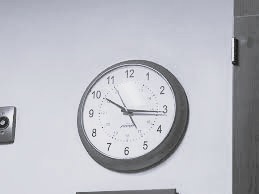
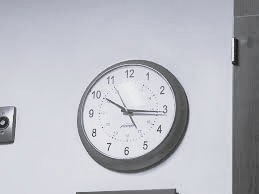
There’s a huge clock on the wall behind the desk. One of the hands jerks forward every second, which is absolutely mesmerizing when your husband’s face has taken on the color of Mod Podge glue. So you know for a fact it takes seven minutes and fifty seconds for an employee to make an appearance at the check-in desk. Without making eye contact, the woman extends her arm. There is a clipboard attached to the end of it. You take it, as Ryan is now pacing. Somewhere on all six pages that need to be signed are the words: Patient is responsible for services not covered by insurance. Ryan manages to sign and pace simultaneously.
You return the clipboard to the employee. She slides them into a manila file folder, and leaves with it.
A few minutes later, a heavy steel door opens, and a nurse stands statue-like inside its frame, studying an open manila folder. You are confident that the proclamation at the entrance stating that patients will be seen in the order of the severity of their illness is factual and truthful and sincere. You are certain the nurse is going to utter the name of the one person in this room who is obviously sick.
“Joyce Michaels.”
There are two possibilities. One is Ryan has a kidney stone. Three years ago Ryan’s three-year-older brother had one. You mentioned this possibility to Ryan while you drove like Mario Andretti. The other possibility is that something catastrophic is happening in one—or all—of Ryan’s crucial organs.
Twenty minutes later the steel door opens again. The nurse says, “Samuel …,” but then stops to flip through the manilla folder.
You never could speak up. In third grade, your teacher interrupted your speech about your new puppy. “We can’t hear you.” You could not raise your voice, and you got a D. At a restaurant, if you request meal #2 and they give you meal #5, which costs less, you eat it.
But there is a pain-scale poster on the wall next to the TV, and you know your husband is beyond choosing the cherry-red face with the huge frown emoji. He is beyond speaking up for himself.
Here are your options:
(A) Approach the steel door and politely plead with the nurse to help your husband who is experiencing severe pain.
(B) Stomp toward the steel door, remind the nurse that patients are supposed to be seen in the order of the severity of their illness, point to your husband and demand that she identify the person who is obviously the most severely ill.
(C) Do nothing.
“… Forrester,” the nurse concludes. “Samuel Forrester.”
You and your husband have cut off all lines of communication. He is consumed by his pain. You are consumed by panicking about his pain, and as always, by your insecurities.
#
Twenty-five minutes later you follow your husband and a nurse through the elusive doorway. You are led to a curtained-off cubicle. Immediately an employee wheels in a computer on a cart, asks for Ryan’s insurance card and ID, taps on her keyboard, and leaves.
Because the “walls” are polyester fabric, you hear the story of the patient in the next cubicle: “A few years ago I broke my foot, and I got a pain killer that I was supposed to take one every six hours, but I had to take two every four hours because my foot was killing me, and then we went to Six Flags Friday, and there was a crack in the sidewalk, and my ankle didn’t hurt too much at first, but then yesterday it started throbbing like crazy, and today I can’t walk on it, and the pain is killing me.”
Sprinkled throughout her story are a few deeper “yep’s”—a man’s voice.
The first time the girl tells her story to a nurses’ aide is a reprieve from your panicked state. But the second and third renditions told to a nurse, then to a doctor—(when your husband has still only seen the financial guy)—are as maddening as a politician’s speech when you know they’re lying, and let’s face it, they’re always lying. On her second telling, it’s revealed that the foot injury was her left side, whereas the ankle pain she’s here for is her right, so half of her story is irrelevant.
A fourth employee walks into Ryan’s neighbor’s cubicle and says, “Tell me what brings you in today.”
Here are your options:
(A) Walk into the hall and say to the first person you encounter: “Excuse me. Can you tell me when someone will be in to see my husband? He’s in a lot of pain.”
(B) Fling open Ryan’s neighbor’s curtain, (except you peek and it’s already open), and shriek, “She twisted her right ankle at Six Flags two days ago, and she might be drug-seeking. Now get over here and give my husband something for pain.”
(C) Do nothing.
Fifteen minutes after doing nothing, somebody takes Ryan to get a CT, which confirms a kidney stone. When Ryan returns, an older woman comes in to draw his blood. She skillfully lines up her equipment on the bedside table like she is about to perform a sleight-of-hand trick, and as she sticks the needle in, she confides that she, too, once had a kidney stone. “The pain was worse than when I delivered my 10-pound son without an anesthetic.”
By now, Ryan has been here for close to three hours and hasn’t received even a Tylenol.
Here are your options: Oh, forget it! Everybody knows you’re going to choose C.
There is change-of-shift commotion by the time they push medication into Ryan’s bloodstream. You watch the pain drain from his face like chalky water from a clawfoot bathtub. For a minute this feels like the happiest moment of your life. You bet it literally is the happiest moment of Ryan’s.
#
You tell yourself the next time will be different. The next time you will be self-confident, bold. You will speak up, initially in an agreeable manner, but you will transition quickly to option B. The doctor says there is definitely going to be a next time. Ryan is a “chronic stoner,” someone who will form kidney stones over and over again.
BIO: Jan Allen is loving retirement. Her stories have appeared in Pithead Chapel, Fiction on the Web, The Orange Rose Literary Magazine and others she can’t recall off the top of her septuagenarian head.
Follow on Social
Literary Garage: Storytelling with grit, heart, and no off-ramp.
© 2025. All rights reserved.
Connect


editor@literarygarage.com
Follow us on Substack for updates and news
Clicking thE SUBSTACK link will direct you to an external website for our Substack feed. The content and privacy practices of Substack are not controlled, and no responsibility is taken for any issues that may arise on the platform.
Editor-In-Chief: Kevin Christopher Michaels
Special Features Editor and Warrior God: Michael Downing