
An Eye for an Eye
STORIES
By Norman Birnbach
6/15/2026
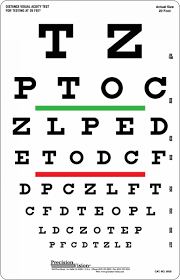
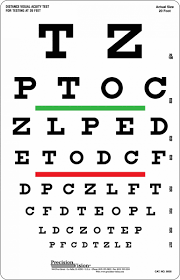
The operation hadn’t gone well.
He had delayed it as long as he could, but the cataract in his right eye was getting worse. “You’re worrying over nothing,” Didi had told him. “It’s routine. Dr. Erickson does dozens every week. She operated on me a couple of years ago—no problem.” If he didn’t get it fixed, he’d lose his job. He drove the North Shore 442 bus—after twenty-three years on the same route, he could drive it with his eyes closed.
“Which is practically what you’re doing now,” Dr. Erickson had said during his exam four months earlier. “If you’re unsure, because of the slight risk I mentioned, get a second opinion. Anyone else will back me up.” He had his hand on the doorknob, and she’d already swiveled to her computer, so that he could see only one pearl earring, when she added, “It might be different if you planned to retire. But I wouldn’t be doing my job if I let you keep doing yours without removing that cataract.”
2
Dr. Erickson knows there are review sites where patients rate their healthcare providers, like DocScore, WhiteCoatReviews, or CareGrades—she just assumes patients don’t actually use them. That changes when Neela, the office manager, walks in and shuts the door behind her.
“Your ratings have dropped significantly,” Neela says, as if Dr. Erickson knows what she’s talking about. Dr. Erickson has a clean record with the Massachusetts Board of Registration—no malpractice claims, no disciplinary actions.
She scoots aside to let Neela sit, access the practice-owned computer, and pull up one of the sites.
“Last year, you had only nine reviews, but your 4.79 ranking out of five is great. Today, you have thirty-six reviews, which is in the expected range for someone in practice for ten years. But your average is now 2.33, and some of the reviews are brutal. Complaints about lack of bedside manner, professionalism, knowledge, and competency.”
Every site shows the same nosedive.
“Look, we’re not getting complaints directly from patients, either when they leave, via our post-visit survey, or when they’re scheduling follow-ups.” Neela continues. “But someone is complaining online.”
“What can we do about it?”
“We reported the issue to every site. They won’t take anything down. We may not like them or think they’re from actual patients, but technically the posts don’t violate their terms and conditions.”
“Does anyone actually pay attention to those sites?”
“New patients? Absolutely. Right now, they’re asking for Nikhil—even though he’s booked out for months—or Tina, for after she returns from maternity leave.” Neela taps a printout, and Dr. Erickson is briefly distracted by Neela’s new Tiffany bracelet. “You’re down twelve percent in new patient appointments. That’s a minor problem if temporary but we can’t let it grow into a bigger one.”
Dr. Erickson remains calm under pressure despite seething at what seem like accusations; professional, almost monotone, in her responses. Not defensive. She’s trying to process what Neela is saying and why her reviews are tanking. But she recognizes one thing: Neela isn’t just the office manager. She’s also the wife of Nikhil Gupta, the practice’s managing partner and largest shareholder. Neela acts like she’s trying to be helpful, but Dr. Erickson knows better. Neela stands up. “Figure out who has a beef with you. And fix it.”
3
The first bad review appeared three months ago: a two-and-a-half-star rating from “BV.” Dr. Erickson doesn’t have a patient with those initials. The second was a two-star review signed “ICU.” Clearly not real patients.
She combed through her recent charts. Most cases were routine. Boring even—which is good. It means things were handled appropriately.
A few patients are always challenging. Some hate the equipment: dilating drops, the tonometer for detecting glaucoma, the slit lamp's bright light for checking the structure of each eye, and the phoropter for determining prescription strength. Unfortunately, some of the worst need more frequent monitoring—diabetes, glaucoma, macular degeneration. Harry Donner. Phil Carlson. Billie Sanders. Mei Hsu, Gus Costa.
Phil, a retired cardiologist, thinks he’s an expert in all things ophthalmic. But she likes Mei Hsu, always accompanied by her husband, even though Mei requires double appointments to settle her nerves. Harry flinches at everything. None of them seems tech-savvy enough to launch a smear campaign.
With truly challenging patients, she’ll recommend a specialist or instruct the schedulers to tell patients she’s booked solid for months and suggest one of her colleagues. But she doesn’t like making difficult patients someone else’s headache.
Because she’ll hear about it from Neela.
4
He felt discomfort after the surgery. He hoped it would get better, but every blink was like sandpaper: hurt like hell. Gus’s right eye got worse: sudden flashes, peripheral vision loss, heightened sensitivity to light—even headlight glare at night, when Didi drove them in his newer Sentra.
A detached retina, one of the possible side effects that Dr. Erickson had downplayed. His eye needed months of healing from cataract surgery, with regular monitoring, before she could attempt the repair. The timeline kept getting pushed back—first 90 days, then longer as complications persisted.
Because he wasn’t cleared to drive, he tried getting reassigned to an office job, but the positions he qualified for paid far less. The union rep was unhelpful. After twenty-three years with the MBTA—regular riders who barely acknowledged him but blamed him for every congestion and construction delay—he went on long-term disability. It kicked in after thirty calendar days. At fifty-three percent of his salary.
He spoke with several lawyers, but none believed he had a viable malpractice case or would take it on contingency. Of course, he couldn’t afford to pay legal fees out of pocket. One said he’d take it on only if Gus set up a GoFundMe to raise $25,000; it would be a long shot, but if he were to win, Gus would get the full settlement—not just the balance under contingency.
Didi was sympathetic to his pain, his earlier-than-expected retirement—at first. Then she encouraged him to move forward. Find a new job or go back to the soup kitchen where he used to enjoy volunteering. A hobby. Something to give him purpose.
He wanted accountability for Dr. Erickson.
Didi found a state workforce counselor to install and train him on adaptive technology to access the internet. One bright spot.
He met with a therapist by Zoom—at Didi’s insistence. The therapist asked him to rank his anger. “On a scale of one to ten, it’s a fifteen,” he had told her. “On a good day.” The antidepressant helped him sleep, but the therapy didn’t help.
Neither did returning to Dr. Erickson—but she was in-network, which was cheaper, and other nearby practices weren’t—for post-op care, including steroid eye drops and regular injections into his right eye to relieve pain and aid healing. The pain eased, but his vision stayed the same. The stress of the complications had worsened his diabetes control, and his cardiologist had adjusted the dosage of his beta blocker and the ACE inhibitor twice since the vision problems began, all of which was updated on his electronic medical records across the network.
He wasn’t interested in playing video games—poor depth perception. He could still get around the house, take out the garbage. Laundry was a problem. But while he could rinse plates and utensils, he often missed caked-on goo hiding on pots and pans or took too long cleaning them. Either way, Didi often had to rewash after him, so he stopped trying.
Some nights, waiting for Didi to come home, he’d lie awake calculating: twenty-three years—gone. Didi picking up more shifts at fifty-eight to make up his forty-seven percent smaller paycheck, the result of a “routine procedure.” He started watching movies. Well, listening to them. It wasn’t the same.
Until he landed on a doctor-rating site.
5
He learned to use the screen reader software. He checked—no malpractice suits against Erickson. Her rankings were crazy high. No record of negligence. And, according to the lawyers, proving negligence, including breaching the standard of care and causation, was necessary to pursue a case or to file a complaint with the medical board. And hard to prove.
Without telling Didi, he found a new hobby: crafting negative reviews. The accessibility software made it possible, if slow going—but what else did he have to do? He’d never posted reviews for anything before, but rage was a good tutor. He figured out some shortcuts. He bookmarked the different review sites to make them easier to find. The plan: nothing too dramatic at first. If there’s a flood of negative reviews, some algorithms might notice. He registered each username under a different email, verified them. This would be a drip. A slow bleed.
He expected pushback—comments, challenges, from Erickson or maybe from the sites themselves.
None came.
Over two months, he posted dozens on each site—more than sixty altogether—varying his writing style and complaints. Her ratings dropped from 4.79 to 2.33 to 1.42. Couldn’t tell if that made a difference. On injection days—when he went home wearing an eye patch like a pirate—the waiting room seemed full. Though maybe not with her patients.
Maybe he didn’t have a case. But it was definitely her fault.
She ruined his life.
She’d said she was sorry he was in pain but never apologized for the vision loss. Not for the forced early retirement.
He had to do something.
If he switched doctors, he wouldn’t be in a position to get revenge. She had hurt him, his career, his life with Didi—without a sense of guilt or decency. Like it didn’t matter. Like swatting a bug.
6
Only one patient arrives truly furious. Gus Costa.
Every visit.
Doughy, bald and pale like an egg, he bristles at everything Dr. Erickson asks him to do—read from an eye chart, say—like she’s demanding a kidney.
Late one night, her mother calls to say her monthly care service fee increased $225. Another $2,700 in unexpected annual expenses. Or, if her mother lives another decade: $27,000, the price of a five-year-old Audi. And that’s not including future increases. Another death by a thousand cuts.
Dr. Erickson starts researching in incognito mode. How to spot fake reviewers. What laws protect against online defamation?
Reddit is full of doctors hurt by negative reviews, but the sites show zero empathy. Zero responsibility. Without subpoenas, they won’t release any information. Which won’t happen because the police won’t investigate.
At work, she acts as if everything’s fine. In reality, she’s losing sleep, eating more. Drinking alone. There doesn’t seem to be a way out.
The consensus of advice she finds is: ask patients to leave positive reviews. What’s next? Asking patients to like and subscribe? The negative reviews won’t disappear, and she doesn’t have enough patients to dilute them.
Writing positive reviews herself? Impractical. Responding to each post? Too time-consuming. If she responds to one with a reasonable note—Unfortunately, no one in our records matches this patient, and even if we did, we can’t respond due to HIPAA regulations. Please contact our office so we can improve the level of care—she’ll have to respond to every single false review, and new ones get posted each week across multiple sites. If she doesn’t keep up, missing one or two will validate the other reviews. Claiming they’re all—every single one—fakes, and that there’s a vendetta against her, will make her appear paranoid. Erode her credibility. Fan the flames.
But the reviews are affecting her job, threatening her livelihood, and she can’t stand leaving them unchallenged, her reputation undefended. It’s unfair and she feels victimized. And powerless.
She doesn’t like feeling powerless.
Because the reviews aren’t abusive—no slurs, no threats—the lawyers she consults can’t help. One offers this: Don’t respond, and don’t hide. Get more involved in the community. Join a board or two of a local charity. Speak to local schools and senior centers. Donate time to provide free care to needy patients.
7
Dr. Erickson is in demand.
Not at her practice—but everywhere else. Charities. Schools. Public health campaigns. Her name and photos are everywhere. The office posts every speaking gig and article to social media, and she sends some clips to her mother. Things are turning around.
But that’s not how Neela sees it. “That helps,” Neela says, “but you’re spending less time with actual patients, and the negative reviews keep coming.” She uses a yellow highlighter to emphasize a line on her printout. “Referrals and patient acquisition rates keep dropping, and your patient load is shrinking.” All Dr. Erickson’s hard work is not translating where it matters most.
Worse, according to Neela, patients know her name from her charity work, but new patients seem increasingly aware of her toxic reviews. Other patients in the practice are leery of having her cover when Nikhil or Tina aren’t available. Patients would rather wait than be seen by her. Which is a staffing management problem compounded by the rise in her appointment cancellations and no-show rates. It’s affecting profitability.
“We can’t afford to support a physician drawing a salary who’s a drag on profits,” Neela says. “If you can’t find a way to turn things around, well, as you know, under the partnership agreement, Nikhil needs to give only thirty days' written notice.”
8
Nikhil and Tina, now back from maternity leave, act as if Dr. Erickson’s negative reviews are contagious. And if Nikhil terminates the agreement, she’ll be in trouble.
Landing another private practice job will be hard, particularly when they ask why she left. An optical chain in a mall would represent a substantial pay cut. And a blow to her prestige.
Either way, she’ll have to keep paying thousands for her malpractice premiums, especially to maintain “tail coverage” against future lawsuits.
Her pre-owned Audi needs a new transmission. Her contractor is halfway through her kitchen remodel. She had saved for that, but between her mortgage and her mother’s monthly care, she has little outside her 401(k).
It’s not as if she lives a fancy life, with jewelry, a ski house, a country club membership and lavish vacations like Nikhil and Neela. But even though she hadn’t planned on it, she’s on the hook to support her mother in retirement. For ten years, she’s paid her student loans automatically submitted by her bank. After recently checking the remaining balance, thinking she must have paid off most of the $280,000 in student loans at seven percent interest, she finds upsetting news. She’s paid more than $175,000 since she graduated, but still owes $227,000.
If she has to settle for a career in mall ophthalmology with a mall salary, she’ll never be able to get out from under her student loans.
9
The articles pissed him off.
“Rotarians honor Dr. Erickson.”
So did a radio interview she gave, identifying cataract risks and asking listeners to donate used eyeglasses.
And the photos: Dr. Erickson attending a Boston-area gala in a gown—he’d never seen someone he knew wear a gown other than brides. Volunteering with the Commonwealth Vision Foundation. On panels at local senior centers about the need to increase awareness and access to eye care. Speaking for Save Boston’s Children’s Vision.
She wasn’t suffering. My life sucks, and she’s thriving.
And he couldn’t talk to Didi. She didn’t have much in the tank from taking on extra shifts. Or from dealing with him.
He needed a new approach. One that would punish her.
10
Some of Dr. Erickson’s charities are getting concerned. Someone is sending links to her reviews.
That must be why—after praising her for being an excellent spokesperson—the executive director of Save Boston’s Children’s Vision is avoidng her calls. Or why the Commonwealth Vision Foundation postpones a panel she was slated to moderate.
She knows who’s behind this.
At Gus’s last appointment, he says, “I see you’re involved with some good charities,” and names them.
Her blood chills. Those aren’t listed on her practice’s website. “It’s important to give back,” she says.
“Are you doing that to offset your reviews?” he replies. It seems to have slipped out.
“Do you have anything to do with them?” she asks.
“Of course not,” Gus says, like he practiced this, all innocence. “Can’t see well enough to use Didi’s computer.”
While lowering the needle to his eye, she feels his anger fueling hers, and she imagines slipping just a fraction deeper. The thought scares her—because it would work.
After he leaves, Dr. Erickson knows. This won’t stop.
Not unless she makes it stop.
11
At his next appointment, Gus is ready. He knows Dr. Erickson is aware of the negative reviews—they’re working! But she has no proof. He’s been careful, following online advice to stay within the sites’ terms and conditions. Nothing actionable. Nothing she can do.
She’s rattled.
About time.
But that’s not enough.
Didi would tell him this isn’t the way. But he’s practically blind. Discarded. Erickson took everything away from him.
He watches her routine. From the past three visits, he knows: she leaves within thirty minutes of her last appointment. She parks her vintage red Audi in the same spot in the alley behind the clinic. Always walks alone.
The flashes and peripheral vision issues don’t keep him from casing the alley. There’s space for several parked cars, a graffiti-tagged dumpster, and barely enough turnaround room for a delivery truck. Any windows in the surrounding buildings are either grimy or plastered with fading signs. Scaffolding from the renovation project next door casts shadows. The construction crew leaves at four on the dot. He’ll need just five minutes to get into position.
In other words: perfect.
Two weeks ago, he tripped on a wrench left by the construction crew, nearly breaking his neck. The wrench was heavy and stamped “PULTE CONSTRUCTION” along its shaft—which gave him an idea. When he got home, he wiped it, wrapped it in a ratty towel, and put the wrench inside the basement so Didi wouldn’t ask questions. No obvious link to him.
His next appointment is her last of the day. He’ll stand behind one of the scaffolding poles, the one next to the dumpster, on her way to her car, and knock her out with the wrench. If he can, he’ll aim for her right eye.
Then, she’ll know what it’s like.
And he’ll Uber home.
12
Here’s her plan. Gus is coming in for another follow-up appointment next week. She’s tried to refer him to another doctor at a different practice. She can’t refer him to Nikhil or Tina—that would invite more questions from Neela. But Gus refused: “If you don’t treat me, I’ll file a complaint.”
Neela has made it her problem. But Dr. Erickson can’t confront him. He’ll deny everything again. Each week, another fake review. No one defends her. There’s no way—no other way—to stop him.
This is her only way out.
At each appointment, she’s injected triamcinolone for inflammation. But this time, she’ll add a second injection of lidocaine with epinephrine and tell him it’s for enhanced pain control. But in combination with his diabetes and heart disease meds, it will cause cardiac arrhythmia. Heart attack. Natural causes. Easy to miss during an autopsy. Twenty minutes before onset, faster if he exerts himself.
It’ll be her last appointment.
While it takes effect, she’ll skip her usual end-of-day routine, pitch the syringe into the dumpster out back, jump into her Audi and be on her way home.
13
He’s nervous as he gets out of the Uber. He’s relieved Didi was working, so she couldn’t drive him. The waiting room looks busy, filled mostly with old folks—actually, people his age.
He’s shown into Dr. Erickson’s office.
“You know the drill,” she says. “A few drops of iodine to sterilize and the speculum to keep your eye open.”
“The highlight of my week.” He smiles, which feels odd in this office.
“I know this has been hard.” She reclines his chair. “I didn’t want this outcome for you.”
Nicer than usual.
The iodine floods his eye, burns, leaves a metallic taste in his mouth. Dr. Erickson fits the speculum, forcing open his eyelids. Uncomfortably wide.
“Sorry,” she says, sounding professional again. “Don’t blink.”
He focuses on a corner of the ceiling tile.
She leans in, steadies her hand.
A shadow crosses his vision. A brief flash of light.
14
The injection goes smoothly.
“I’m trying something different,” Dr. Erickson says. “The usual triamcinolone plus a stronger dose of lidocaine with epinephrine to help with the pain.” Without releasing the speculum, Dr. Erickson picks up a second syringe. “You may feel warmth.”
“How come you didn’t try this earlier?”
His tone surprises her—it doesn’t have its usual edge. “This is a new protocol. Your heart may race a little. That’s normal.”
She removes the speculum, sets the syringe on her desk and places an eye patch over his right eye.
He gets up to leave.
“Book a follow-up in two weeks.” She’s already turned away, entering data onto her computer.
15
Gus heads to the scaffolding. Pulse racing, he’s shaky. Sweat beads above the patch covering his right eye, despite the cool air. From his backpack, he takes out the wrench. Feels heavy. Didi would never approve—but he’s got to finish this.
His left eye spots Dr. Erickson, entering the alley, something in her hand. He thought she’d need more time to finish her paperwork. Despite the burning in his neck, he’s ready.
Erickson sees him: a human-sized egg with an eye patch and shaggy MBTA windbreaker half-hidden behind a pole.
He steps out, blocking her path.
A car alarm sounds from the other side of the building.
“What do you want, Gus?”
“You’ve ruined my life.”
“That’s why you wrote the reviews.”
“You never apologized. Not once.”
“I did everything right.” She keeps walking to the dumpster. Glances at her watch. “Do you feel it yet?”
“What the hell did you give me?”
“Justice.”
“Then this’ll make us even.”
The wrench comes up fast. Breaks her nose with a harsh crack. She screams; her left hand clutches her nose.
The second blow crushes her eye.
She staggers but doesn’t fall. Her right hand—still gloved—covers her eye. Something drops, skitters across the pavement. Stops short of the dumpster’s wheels.
Blood. On the towel. On his hands. The stink of copper fills his nostrils.
He swings again.
Sound roars in her head. She falls.
Sweat blinds him. Arm tingles. He buckles. The wrench slips and clatters against the ground.
Now both of them are down. Gasping.
She tries to get up. Can’t. Sees him grabbing his chest. His face twisting—not with anger, but confusion.
Cardiac event. As planned.
Her gloved hand gropes for something—not the wrench.
It takes Gus a moment to understand.
The syringe.
It lies between them, out of reach.
Blood floods her throat. His heart convulses.
The alley tilts. Spins.
Both understand.
Neither of them will leave this alley.
# # #
BIO: Norman Birnbach is the co-author of Stealing Time, a Kindle bestselling time-travel jewelry heist novel and a 2025 Silver Falchion Award finalist and 2024 Claymore Top Pick. His fiction spans crime, literary, speculative and humor, and has appeared in The New York Times, The Wall Street Journal, CrimeReads, The Magazine of Fantasy & Science Fiction, McSweeney's Internet Tendency, and Boston Globe, among other outlets. He lives outside Boston with his wife, three children, and dog, Taxi. Visit his website: normanbirnbach.com.
Follow on Social
Literary Garage: Storytelling with grit, heart, and no off-ramp.
© 2025. All rights reserved.
Connect


editor@literarygarage.com
Follow us on Substack for updates and news
Clicking thE SUBSTACK link will direct you to an external website for our Substack feed. The content and privacy practices of Substack are not controlled, and no responsibility is taken for any issues that may arise on the platform.
Editor-In-Chief: Kevin Christopher Michaels
Special Features Editor and Warrior God: Michael Downing